


Aaron in the Bible
Bible Review's Supporting Roles by Elie Wiesel
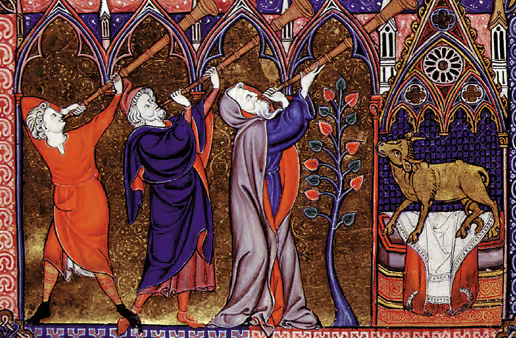
Aaron, the first high priest and brother to Moses, worships the golden calf, in an illumination from the late-13th-century manuscript La Somme le Ray. Elie Wiesel points out that this incident, which had disastrous consequences for the Israelites fleeing Egypt, cast a shadow over Aaron. In Exodus 32, Aaron instructs the Israelites, who had grown restless during Moses’ long sojourn at Mount Sinai, to gather their jewelry and fashion a golden calf. He then constructs an altar and begins to worship. When Moses returns and sees the people worshiping the calf, he is angered by their idolatrous sin and throws down the stone tablets inscribed with the Ten Commandments. Later, when the Lord punishes “the people who through Aaron made the bull-calf” (Exodus 32:35), Aaron remains unharmed—a mystery Wiesel raises but cannot solve. Photo: British Library MSADD 28162, Folio 2V.
I have a problem with Aaron, number two in the great and glorious epic that recounts the liberation of the Jewish people from slavery in Egypt. He is a man of peace. He succeeds at everything. Everyone admires, even loves him. Whether great or small, they need him, his understanding and his mediation. Whatever he does, he is well regarded.
But is it possible that Aaron is without fault? Like all biblical characters, he must be imperfect. He too has his moments of weakness and his crises. But in those he is forgiven.
His younger brother Moses must overcome obstacles and dangers. More than once, Moses’ life has been threatened and his reputation questioned. But not Aaron, who passes through difficulties unscathed. Moses is often torn between two passions, two obligations: the demands of God and those of his people. But not Aaron. When the Hebrews became impatient and restless in the desert, demanding food and drink, they did not rise up against Aaron, but against Moses. Likewise, when God became angry at the people for their lack of faith, most of the time his anger was directed at Moses alone. Is this because Moses, the great political and military leader, represented civil authority, while his brother Aaron, the high priest, embodied spiritual authority? One would say that providence seemed to smile more on Aaron than on Moses.
While the Hebrews were still in Egypt, enslaved and suffering under Pharaoh’s harsh laws, it was Moses who defended them, going so far as to kill an Egyptian guard who was beating a Jewish slave. In the desert, again it was Moses who had to strike the rock to find a source of water. One gets the impression that as soon as there was danger, Aaron slipped away from the scene.
FREE ebook: Ancient Israel in Egypt and the Exodus.
Nevertheless, Aaron’s balance sheet is not completely clean. At least two disconcerting episodes cast a shadow over his life. If the first arises out of his public persona, the second is strictly personal.
The first is linked to the golden calf. That Aaron played an important role in this episode is clearly indicated in the text. True, the idea of making the golden calf comes from the people, but it is Aaron who gives it life. It is Aaron who collects the golden jewelry; it is he who builds the altar and lights the flame; it is he who makes the idol. Aaron even goes so far as to invite the idolatrous masses to a feast the next day. To celebrate what? The birth of a new god? Or a new faith? “Chag la adoshem machar,” he cries. “Tomorrow is a feast unto the Lord.” Has he forgotten the Law that the Lord gave to the people of Israel gathered at the foot of Mount Sinai? Has he forgotten his brother, who ascended to the heavens to receive it in the name of this very people?
Naturally, God becomes angry. Against his people? Yes, but also, indirectly, against Moses. God tells him, “Go down and you will see how far (to what point) your people has corrupted its faith and truth” (Exodus 32:7). God does not even mention Aaron. God condemns the entire people of Israel, but silently passes over the fact that it is the high priest himself who has fashioned—with his own hands—this idol. Note well: God seems critical of Moses, who is blameless, but not of his brother, who collaborated—either voluntarily or under duress—in an abomination that had disastrous consequences: Three thousand Israelites died (Exodus 32:28). It was the will of God: The men of the tribe of Levi went from gate to gate, each with the order to kill his brother, his friend, his parent (Exodus 32:27).
But…where is Aaron? Has he joined the killers of his own tribe? He was not among the victims—that is certain, since he continued to live for many more years, fulfilling his priestly functions. As though nothing had happened. As though God had forgiven him, and him alone, for a sin for which three thousand others had died at the hand of their avengers.
FREE ebook: Frank Moore Cross: Conversations with a Bible Scholar. Download now.
Don’t we have the right to ask the text, why this favoritism to Aaron? In the Midrash,a our sages try hard to answer this question and end up inventing several explanations that exonerate Aaron. For example: Aaron had no choice. If he had refused, he would have been assassinated. Or: It was out of loyalty to Moses that he agreed to make the idol—all alone. Thus, far from the crowd, Aaron deliberately stretched things out to give Moses time to return from his mission. Or another: Aaron chose to commit the sin himself, rather than have the people commit it, thus saving them from greater guilt and condemnation without mercy.
Yes, Aaron is certainly well loved in the Midrash—a little less in the Bible, let’s admit it. When God explains to Moses why he and his brother Aaron may not enter the Promised Land, he uses harsh words, hurtful arguments. But, Aaron can console himself because he is not the only one to be blamed.
The second episode is no less troubling. It concerns the malicious words Aaron and his sister Miriam direct against Moses. They seem to reproach him for his superiority over them—and also for his marriage to a black woman, a non-Jew, a “Cushite” (Numbers 12). God judged it necessary to reprimand them, and to punish Miriam—her skin becomes white with leprosy (Numbers 12:10).
There again, we cannot understand the divine attitude toward this “first family” of the Jewish people: If Miriam was guilty, so was Aaron. But he was not punished. Here again, the Midrash moves heaven and earth to explain this divine inequity.
The lesson of this story: In the Bible, as in life, there are some problems that remain insoluble.
Translated from French by Anne Renner.
Notes
a. Midrash is a genre of rabbinic literature that includes nonliteral elaborations of biblical texts.

Elie Wiesel
The author of more than 30 novels, plays and profiles of Biblical figures, Elie Wiesel received the Nobel Peace Prize in 1986. This online publication is adapted from Wiesel’s article “Supporting Roles: Aaron,” which was published in Bible Review in December 1998. At the inception of Wiesel’s Supporting Roles series in Bible Review, BAS editors wrote:
We are pleased—and honored—to present our readers with the first of a series of insightful essays by Elie Wiesel, the world-renowned author and human rights advocate. Wiesel is best known for his numerous books on the Holocaust and for his profiles of Biblical figures and Hasidic masters. In 1986, he was awarded the Nobel Peace Prize. His occasional series for BR will focus on characters in the Bible that do not occupy center stage—those who play supporting roles.
This article was first republished in Bible History Daily in October 2013.
More “Supporting Roles” by Elie Wiesel in Bible History Daily
All-Access members, read more in the BAS Library
Not a BAS Library or All-Access Member yet? Join today.
Related Posts





Must-Read Free eBooks
Want more Bible history?
Sign up to receive our email newsletter and never miss an update.
Unlock Unlimited Access to the Bible's Past

Unlock Unlimited Access to the Bible's Past
Become an All-Access Member to explore the Bible's rich history. Get Biblical Archaeology Review in print, full online access, and FREE online talks. Plus, enjoy special Travel/Study discounts. Don't miss out—begin your journey today!

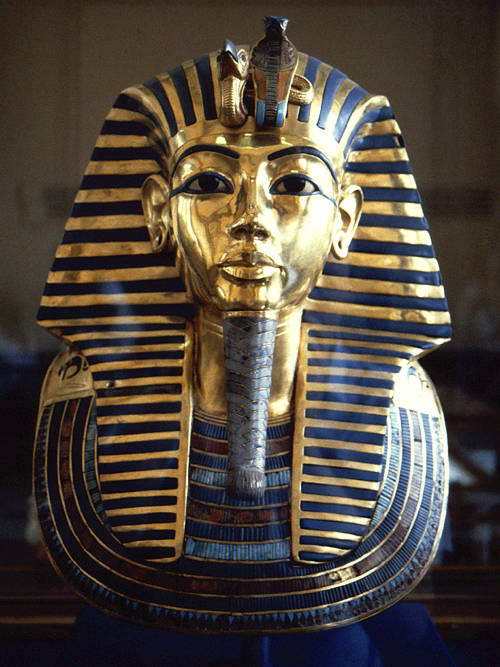
It’s because the character Aaron is loosely based on the life of the Pharaoh Akhenaton. While Moses is loosely based on all Pharaohs of the 18th Dynasty.
Aaron worshipped the Solar Calf as did Akhenaton, and there’s no question who made the breastplates in that day with lattice of gold and purple, with 12 rows of stones in patterns of 4 repeating 3 times.
http://upload.wikimedia.org/wikipedia/commons/2/2d/Tutmask.jpg
The golden calf story appears to be the deuteronomist’s dramatic retelling of the sin of Jeroboam (compare to 1 Kings 12:25-33). It depicts God kindling his wrath in response to the institution of the use of the gold calf of worship. This story serves as an explanation for why God let the Assyrians invade Israel. It’s as if to say: “God punished the Israelites in the wilderness for building ONE golden calf and here you all went and built two! What did you think would happen?” At the same time, whoever is writing this story as a polemic against the use of graven images and in favor of centralized worship in the Jerusalem temple, is not going to undermine the Aaronid priesthood who is charged with carrying out Israel’s exclusive devotion to YHWH. Therefore, in the deuteronomist’s telling of the tale, Aaron gets a pass.
@ Rose, and Danny
Or, perhaps, it is just as the Bible records it! The Biblical record doesn’t require anything to be based, however loosely, on any Egyptian pharaoh. Nor does “the deuteronomist” (Moses himself, apart from the final brief section recording his death), need to be seen as dramatically retelling a later event in the history of the Chosen People! Deut.29:29; Gen.18:25.
I often wonder why a site such as Bible History Daily is read, and commented upon, by those who appear to have no acceptance of the Biblical record, as it stands.
The people knew Aaron better than Moses–he suffered along with them in bondage, while Moses was raised as a prince in the Egyptian court and then dwelt in freedom among the Midianites for forty years! Aaron may have been weak when he made the golden calf at the insistence of the Israelites, but when Moses demanded, “Who stands with me!?” he moved to his brother’s side! And Miriam may have been the instigator of criticizing Moses and was therefore struck with the leprosy, again Aaron being more easily swayed by a persuasive tongue. God knew his heart!
http://www.panoramio.com/photo/48018487?source=wapi&referrer=kh.google.com
Because God knows the heart of each one.
“When God explains to Moses why he and his brother Aaron may not enter the Promised Land, he uses harsh words, hurtful arguments.” What is the biblical reference to this statement? I always wondered what the reason was for Moses being deprived of entrance into the Promised Land after all his effort and suffering
@ CB, I think you misinterpret my statement. I believe in the Bible deeply but one need not believe in the Mosaic authorship of the Torah to take it seriously. Especially because the Torah does not claim mosaic authorship for itself. Setting this aside, I made no statement about whether or not the “golden calf episode” was historic, I was merely speculating about the reason for the story’s inclusion in the book of Deuteronomy, which was to point out that the people were not to worship YHWH with graven images as the Israelites were doing in the north. The purpose of bolstering exclusive devotion to YHWH shaped the way the story was told. This is not scandalous. Matthew, Mark, Luke, and John’s audience, theology, and context shaped which stories they emphasized and which they left on the cutting room floor. This is all I am pointing out. Disagree with it but don’t question my commitment to the bible when you don’t know me.
While many have questioned the Mosaic authorship of the Torah, many likewise defend it. And the JEDP documentary hypothesis has many flaws:
1. Different names for God do not mean different authors; each of the names has
special significance.
2. No MSS ever discovered with J, E, D, or P. All together.
3. No Jewish or other ancient writer ever suggested Moses not author.
4. Jesus, OT, NT, all attribute Torah to Moses.
5. Law already in existence in days of Josiah, 600s BC.
6. After Exile, Ezra re-instituted Law, so it must have been venerable institution.
7. During reign of Ahasuerus (485-65 BC), Jews in Persia kept Law (Esth 3:8)
8. Samaritans kept the Law, at least in part.
9. Wellhausen assumed Hebrews illiterate; this is not true, as the Ebla tablets clearly
demonstrate.
10.The idea of multiple authorship was a 19th-century literary fad that was applied
to everything from Shakespeare to Beowulf to the Nibelungenlied.
I certainly don’t doubt your sincere belief in the Torah; I’m only saying multiple authorship is not supported by the best evidence.
Actually I believe the Bible and take it quite literally, but most Church tradition regarding the Bible is nonsense in my opinion. Religions have a tendency to make up a bunch of silly Axioms that pollute the simple understanding of the Bible itself. Harmonizing the Biblical Record with the Historical Record validates the Bible taking it out of the hands of the Church and making it something real.
Consider Aaron the Levite Priest in Exodus, Leviticus and Numbers. The Levite Priests were the keepers of the Jubile Calendar, which is the seven sabbaths of years, or the forty nine years. Who else was venerated by seven times and seven times? Akhenaton in the Amarna Letters.
Leviticus 25
8 And thou shalt number seven sabbaths of years unto thee, seven times seven years; and the space of the seven sabbaths of years shall be unto thee forty and nine years.
9 Then shalt thou cause the trumpet of the jubile to sound on the tenth day of the seventh month, in the day of atonement shall ye make the trumpet sound throughout all your land.
Abdi-Heba was a local chieftain of Jerusalem writing to Akhenaton in the Amarna Letters.
Say to the king, my lord: Message of Abdi-Heba, your servant. I fall at the feet of my lord 7 times and 7 times…. EA 287.
Say to the king, my lord, my god, my Sun: Message of Shuwardata, your servant, the dirt at your feet. I fall at the feet of the king, my lord, my god, my Sun, 7 times and 7 times…. EA 280
Where was the border betwixt the Promised Land and Egypt exactly in 1350 BCE or so and what proof does the Bible actually offer to draw that line?
7*7
Rose
Despite his privileged position, Aaron had his shortcomings. During Moses’ first 40-day stay on Mount Sinai, “the people congregated themselves about Aaron and said to him: ‘Get up, make for us a god who will go ahead of us, because as regards this Moses, the man who led us up out of the land of Egypt, we certainly do not know what has happened to him.’” (Ex 32:1) Aaron acceded and cooperated with these rebellious ones in making a golden calf statue. (Ex 32:2-6) When later confronted by Moses, he gave a weak excuse. (Ex 32:22-24) However, Jehovah did not single him out as the prime wrongdoer but told Moses: “So now let me be, that my anger may blaze against them and I may exterminate them.” (Ex 32:10) Moses brought the matter to a showdown by crying: “Who is on Jehovah’s side? To me!” (Ex 32:26) All the sons of Levi responded, and this undoubtedly included Aaron. Three thousand idolaters, probably the prime movers of the rebellion, were slain by them. (Ex 32:28) Nevertheless, Moses later reminded the rest of the people that they, too, bore guilt. (Ex 32:30) Aaron, therefore, was not alone in receiving God’s mercy. His subsequent actions indicated that he was not in heart harmony with the idolatrous movement but simply gave in to the pressure of the rebels. (Ex 32:35) Jehovah showed that Aaron had received his forgiveness by maintaining as valid Aaron’s appointment to become high priest.—Ex 40:12, 13.
In response to Rose mentioning the connection between the Levitical Sabbatical and the seemingly universal phrase of the Canaanite vassals; “seven times seven times”; that there was perhaps a borrowing of a priestly tradition from an eastern religion. Canaan was a “servant of servants ” (Genesis 9:25) to the Hurrians of whom the king of Jerusaem, Abdu Hepa was and who was himself was a representative of a class who were dominated by another people, the Indo-Aryans who controlled the Mitanni Empire and were known as “Maryannu” or Lords of the Sky.
The earliest srata of the Rig Veda dates back to this period (Samhita period, 1500-800 B.C.E.), and like later Judaic beliefs, these priests regarded their archaic ritual sacrifices as being the keys to the mystery of creation. Like the seven days of Genesis 1, it is the seven Rsis, or seers, who are the source of divine inspiration.
“So by this knowledge men were raised to Rsis, when ancient sacrifice sprang up, our Fathers. With the minds eye I think that I behold them who first performed this sacrificial worship. They who were versed in ritual and metre, in hymns and rules, were the seven godlike Rsis. Viewing the path of thoses of old, the sages have taken up the reigns like chariot drivers” (Rig Veda, 10:130).
“One of the preoccupations of the Rsis, as represented in the hymns, is to discern with their ‘mind’s eye’ the subtle realms of the gods and to fathom the mysteries of creation” (Veda and Torah, by Barbara A. Holdredge, p.34).
Genesis 1, it is thought, was written after the return from captivity in Babylonia, and we see the eastern influence of the Persian Empire and King Cyrus’ Zoroaster religion (It was then that the Hurdy Gurdy Man came bringing songs of love) on the prophet Zechariah as he frequently mentions the phrase “I raised my eyes” in tandem with a vision. Comparable to the seven Rsis there is the vision of the seven lamps being “the eyes of the Lord, ranging over the whole earth” (Zechariah 4:10).
Gershom Scholem, in his “Origins of the Kabbalah,” devotes the last section to the doctrine of “Shemittoth”, or world cycles, involved in the perpetual process of recreating the world.
“As a matter of fact, doctrines relating to cosmic cycles in the evolution of the world were also known in Jewish medieval literature outside the Kabbalah, Through the intermediary of Indian and Arabic sources, rather than under the influence of Platonic thoughts, ideas of this type slipped into astrological writings in particular” (p.462).
“