


Fruit in the Bible
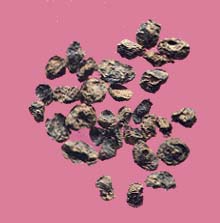
Carbonized raisins from Iron Age I (12th to 11th centuries B.C.) Shiloh were published by Israel Finkelstein in BAR in 1986.
Seeds and fruit remains are exciting discoveries for archaeologists. Not only do they provide clues about ancient agriculture and diets, they can also provide radiocarbon data to help date buried strata.
Fruit also plays an important role in the Biblical narrative. If Eve had not eaten the fruit in Genesis 3, the story of Eden would have looked drastically different. What do we know about the creative ways the Israelites used fruit in their writings and everyday culture?
The Hebrew Bible mentions six types of tree fruit, many of which appear dozens of times:
- Grape (גפן)
- Fig (תאנה)
- Olive (זית)
- Pomegranate (רמון)
- Date (תמר)
- Apple (תפוח)
In my view, these six fruits are used in eight different ways in the Bible. First, many people are named after fruit, e.g., Tamar in Genesis 38:6, which means “date,” Tappuah in 1 Chronicles 2:43, which means “apple,” and Rimmon in 2 Samuel 4:2, which means “pomegranate.”

FREE ebook, Recipes from the BAR Test Kitchen Make your own food from recipes handed down from biblical times. Download now.

In this this anonymous 18th-century icon from the National Art Museum in Kiev, Ukraine, Joshua and Caleb carry grapes back from the Promised Land.
Second, fruits are the namesake for a number of cities and towns, e.g., Anab in Joshua 11:21, which means “grape,” Rimmon (pomegranate) in Joshua 15:32 and Tappuah (apple) in Joshua 12:17.
Third, images of fruit are used as decorations, e.g., the blue, purple, and crimson pomegranates on Aaron’s priestly garments (Exodus 28:33-34) and the engraved date palm trees in Solomon’s Temple (1 Kings 6:29).
Fourth, fruits are the subjects of laws, e.g., the law in Numbers 6:3 that a Nazirite may not eat or drink grape products or the law in Deuteronomy 24:20 that one may only beat an olive tree once (the remaining olives are for the poor).
Fifth, fruits are used in a number of metaphors and similes such as, “Your breath is like the fragrance of apples” in Song of Songs 7:9 and “I found Israel [as pleasing] as grapes in the wilderness” in Hosea 9:10.
Sixth, fruits appear in curses and blessings such as “Your olives shall drop off [the tree]” in Deuteronomy 28:40 and “[Israel is a blessed] land of wheat and barley, of vines, figs and pomegranates, a land of olive trees and honey” in Deuteronomy 8:8.
A team from the Tell Halif archaeological excavation made their own tannur, a traditional oven referenced in the Hebrew Bible, and baked bread in it. Read all about the experiment in “Biblical Bread: Baking Like the Ancient Israelites.”
Seventh, fruits are used pedagogically in proverbs such as “He who tends to a fig tree will enjoy its fruit” in Proverbs 27:18 and “Parents eat sour grapes and their children’s teeth are blunted” in Ezekiel 18:2.
Eighth, and perhaps most obvious, fruits appear as objects in narratives, such as in Numbers 13:23, where the spies of Moses examine the grapes, pomegranates and figs of the land, and in Genesis 3, where Eve eats the forbidden fruit and is cast from Eden.
While these eight categories are neither rigid nor mutually exclusive, they illustrate the diverse treatment of fruit in the Hebrew Bible. Fruit was much more than a food for the ancient Israelites. It was a symbol that appeared prominently in the culture’s names, laws, proverbs and traditions.
When archaeologists uncover seeds, they find much more than radiocarbon data. The Biblical narrative provides a social and symbolic significance for these important foodstuffs, reminding archaeologists that there is much more to these seeds than meets the eye.
Fruit-producing gardens were some of the most luxurious parts of ancient palaces, yet there is no archaeological evidence of the most famous example–the Hanging Gardens–at Babylon. Discover why archaeologists believe this World Wonder was actually located at Assyrian Nineveh.
 David Z. Moster, PhD, is a Research Fellow in Hebrew Bible at Brooklyn College and a Lecturer in Rabbinics at Nyack College. He is the author of the upcoming book Etrog: How a Chinese Fruit Became a Jewish Symbol (Palgrave Macmillan, 2018). His websites are www.929chapters.com and brooklyn-cuny.academia.edu/DavidMoster.
This Bible History Daily article was originally published on January 27, 2014.
Related reading in Bible History Daily
10 Great Biblical Artifacts at the Bible Lands Museum Jerusalem
Ancient Bread: 14,400-Year-Old Flatbreads Unearthed in Jordan
Become a BAS All-Access Member Now!
Read Biblical Archaeology Review online, explore 50 years of BAR, watch videos, attend talks, and more

Related Posts





Must-Read Free eBooks


Want more Bible history?
Sign up to receive our email newsletter and never miss an update.
Unlock Unlimited Access to the Bible's Past

Unlock Unlimited Access to the Bible's Past
Become an All-Access Member to explore the Bible's rich history. Get Biblical Archaeology Review in print, full online access, and FREE online talks. Plus, enjoy special Travel/Study discounts. Don't miss out—begin your journey today!

How many times dose the word fruit appear in the new testament
Could you tell me what the meaning of a date (fruit) would mean for
today? Its symbol?
I once read that apple trees are not native to the middle east and that the fruit translated as apple in English was probably the apricot. Have any apple seeds or dried apple been recovered from archeological sites?
Yesher koach on a wonderfully researched article. Question: can we really call grape vine and pomegranate ‘tree fruit’?
Pomegranates DO grow on trees as I had one on my property in California. My late wife would harvest them and make juice.
Gefen is vineyard, not grape. Anav, later in the article, is correct for grape. Grapes are not a tree fruit, they grow on a vine. Thanks for the article,
Many feel the fruit would have been a fig, since fig leaves could have been used to make the garments, but not apple tree leaves. Since the Bible says they sewed leaves “of the tree”, we know it’s a tree we’ve seen before, hence the tree of the knowledge of good and evil.
Thank you so much. I love this article. I learned so many things which I never thought before.
I am a beekeeper researching kosher matters regarding honey bee honey. I recently heard a Rabbi state that the honey referred to in the Bible (e.g., land of milk and honey) refers not to honey from the honey bee, but rather is a reference to “apricot honey” which he said he has tasted and is not very good. He also said that floral sourced honey from the honey bee was extremely rare in Biblical times. Can you refer me to any information regarding this claim that Biblical honey is actually apricot honey?
Hello Dr. David, can you explain the ancient Jewish Marriage to me. Please…..
That is a great article, so timely. I am working on a sermon on the Feast of Booths that we are celebrating at my church and I came across some of the fruits to be eaten during this celebration. That is amazing. Thank you.