


First Person: Human Sacrifice to an Ammonite God?
As published in the September/October 2014 issue of Biblical Archaeology Review
 As its title indicates, an article in the July/August 2014 BAR addressed the question of ancient infant sacrifice (“Infants Sacrificed? The Tale Teeth Tell” by Patricia Smith), mainly at the tophet in Carthage, and cites Biblical passages (Leviticus 18:21; Jeremiah 32:35; 2 Chronicles 28:3) that fulminate against the practice.
But, strictly speaking, these Biblical passages do not condemn infant sacrifices but the sacrifice of sons and daughters. Is the Bible condemning infant sacrifice or, more broadly, the sacrifice of sons and daughters of more advanced age—or any age? Indeed, the most famous Biblical episode of (almost) human sacrifice involves a son who walks three days up a mountain with his father and converses with him. On the last leg of the journey the son carries the wood. He is referred to as a lad or a youth (na’ar). This of course is the famous Akedah in Hebrew, the binding of Isaac in Jewish tradition, often referred to otherwise (somewhat inaccurately) as the sacrifice of Isaac (Genesis 22). Clearly, Isaac is no infant.
FREE eBook: Life in the Ancient World.
Craft centers in Jerusalem, family structure across Israel and ancient practices—from dining to makeup—through the Mediterranean world.
When Abraham is about to sacrifice Isaac, an angel of the Lord cries out to Abraham to stay his hand, and a ram caught by his horns in a thicket is sacrificed instead of Isaac.
So the question arises, were sons and daughters—as opposed to infants—sacrificed in ancient times? Is there any archaeological evidence?

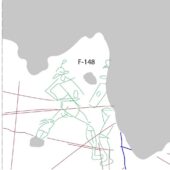
From J.B. Hennessy, “Thirteenth Century B.C. Temple of Human Sacrifice at Amman,” Studia Phoenicia III, Phoenicia and its Neighbors (Leuven, 1985), figs. 3, 4.
In 1955 the late Australian archaeologist John Basil Hennessy excavated a Late Bronze Age (13th century B.C.E.) building he identified as a temple near the airport in Amman, Jordan. In the center of the solidly built structure were two circular flat stones, one on top of the other, that the excavator identified as an altar with which a large number of burnt offerings were associated, including pottery, 50 pieces of gold jewelry, small bronze pins, scarabs and cylinder seals. In the words of the excavator, “The most surprising feature of all in the final analysis of the material is that the several thousands of small bone fragments are almost exclusively [over 90 percent] human … There can be little doubt that a major concern of the ritual at the Amman airport temple was the burning of human bodies.”1 Hennessey’s general impression was that the bones represented an “immature group.” One was of a youth 14 to 18 years of age.
Did the Carthaginians really practice infant sacrifice? Learn more in Bible History Daily.
Larry G. Herr, who continued the excavation briefly in 1976, also found fragments of many human bones around a stone pile (Herr reconstructed the stone pile as originally a square altar) about 20 feet from the temple. This stone pile had functioned as a pyre: “Many small fragments of burned human bones [were] strewn all about the building, but their thickest concentration was near the stone pile.”2 The bones “were primarily from adults” [emphasis added].3

From J.B. Hennessy, “Thirteenth Century B.C. Temple of Human Sacrifice at Amman,” Studia Phoenicia III, Phoenicia and its Neighbors (Leuven, 1985), figs. 3, 4.
As recently noted by the Polish scholar Father Jakub Waszkowiak,4 some scholars have questioned Hennessy’s conclusions, while others have supported them. Larry Herr, for example, rejects the identification of the building as a temple and suggests that it was a crematorium where the bones of the dead were burned.5 But, as Ami Mazar remarks, “This conclusion is difficult to accept … since there are no parallels for the existence of special cremation buildings in the ancient Near East.”6 Herr does admit that if this is a crematorium, it is “the first such site ever found in this part of the world.”7 (On the other hand, as Herr also observes, if the site was for human sacrifice, this would be the first and only such site discovered in the ancient Near East.)

FREE ebook: Exploring Jordan: The Other Biblical Land. Delve into a legendary land rich with Biblical history.
If the site was a temple where humans were sacrificed, it could have served the ancient Ammonite capital of Rabat Ammon, 1.5 miles to the west, although the site mystifyingly also contained Hittite, Mycenaean and Egyptian artifacts.
Jerusalem lay about 44 miles to the southwest. The Ammonite god to whom the humans were presumably sacrificed was Milkom (or Molech). Jeremiah rages against those who offer up their sons and daughters to Molech in Jerusalem’s Ben-Hinnom Valley (Jeremiah 32:35; see also Leviticus 18:21). Finally, Solomon built a shrine near Jerusalem “for Molech, the abomination of the Ammonites” (1 Kings 11:7).
Is the temple at the Amman airport a shrine to the Ammonite god Milkom, like those referred to in the Bible, where human beings were sacrificed? Certainly an intriguing possibility.
Notes:
1. J.B. Hennessey, “Thirteenth Century B.C. Temple of Human Sacrifice at Amman,” Studia Phoenicia, vol. 3, Phoenicia and Its Neighbours (Leuven: Uitgeverij Peeters, 1985), p. 84.
2. Larry G. Herr, “Ancient Crematorium Discovered?” Ministry magazine (November 1981), p. 24.
3. Herr, “Ancient Crematorium Discovered?” p. 25.
4. Jakub Waszkowiak, “Pre-Israelite and Israelite Burnt Offering Altars in Canaan—Archaeological Evidence,” The Polish Journal of Biblical Research 13 (February 2014), pp. 43–69.
5. Herr, “Ancient Crematorium Discovered?” p. 25; see also Larry G. Herr, “The Amman Airport Structure and the Geopolitics of Ancient Transjordan,” Biblical Archaeologist 46 (1983), pp. 223–229.
6. Amihai Mazar, “Temples of the Middle and Late Bronze Ages and the Iron Age,” in Aharon Kempinski and Ronny Reich, eds., The Architecture of Ancient Israel (Jerusalem: Israel Exploration Society, 1992), p. 183.
7. Herr, “Ancient Crematorium Discovered?” p. 25.
A version of this post first appeared in Bible History Daily September 2014.
Related reading in Bible History Daily:
All-Access members, read more in the BAS Library:
Child Sacrifice at Carthage—Religious Rite or Population Control?
Not a BAS Library or All-Access Member yet? Join today.
Related Posts




Must-Read Free eBooks
Want more Bible history?
Sign up to receive our email newsletter and never miss an update.
Unlock Unlimited Access to the Bible's Past

Unlock Unlimited Access to the Bible's Past
Become an All-Access Member to explore the Bible's rich history. Get Biblical Archaeology Review in print, full online access, and FREE online talks. Plus, enjoy special Travel/Study discounts. Don't miss out—begin your journey today!

Hershel is totally wrong: Jewish had to sacrifice firstborn children to god. That was long time tradition ( see Ex 13.2. , Num 3.3.). So why digging on the history of others and blaming them? – Is this the true love of the Hebrew god?
no. God HATES the shedding of innocent blood and child sacrifice was NEVER a long time tradition. If so, Isaac would have been murdered. If you read Leviticus you will see how God sanctifies as instructed in your references Ex 13.2 and the consecration of Numbers 3.3. Did you know Leviticus was written in 1 month? 🙂 read end of Exodus and beginning of Numbers to see the dates. Leviticus is a declaration of a father’s love. HE sanctifies. The Bible is salvation history, and reading the book Finding Jesus in the Old Testament is recommended.
I have long wondered given the biblical account of God’s requirement to sacrifice Isaac and Abraham’s seemingly docile response and his readiness to do so whether the request was viewed by Abraham given the idolatrous culture out of which he came.
Yes, more proof of the divinity of ancient scriptural events this time dating to the 13th century BC. Scripture confirmation of human infant sacrifice this is exciting and important news!
Meanwhile in the real world we see this as evidence of Rameses II relentless pursuit to rebuild Thutmose III’s Egyptian Empire. It indicates a lack of these victims’ parents to suffer their children to the fate of starvation and or slavery at the hands of the divine Pharaoh. It also demonstrates that the God of Abraham, Ishmael, and Jacob forbid such practice. He is demanding the trust of his Chosen People to find them a way to survive when others fail. It also provides protection of the three youths taken to Babylon at a much later date.
For those seeking God of the real world of ancient Israel there is another conqueror of the 13th century. He was eager to make Egypt and Hittite and all lands far and wide submit to him. He is the Assyrian King Shalmaneser I. The real world consideration presented here removes the mysticism from a historical document and glorifies God. Keeping him and his people’s history in the real world of flesh and suffering. Salmaneser I was so far reaching in his goals against Hittite and Egypt. To keep safe and strong these nations threaten by his drive to eat away their territories. They chose to create the first written Peace Treaty AKA the Treaty of Kadesh in human history. Again, God is glorified!
There is in truth nothing mystifying in this. It is only the world God created coming alive in rejoicing at his power and glory in our time and reality. Mr. Shanks nice piece but can we get into the real world? Otherwise, sir I am going continue to claim present considerations of Israel’s ancient past places it in a parallel universe unique to Israel alone.
Jürgen: The God of the Bible never commanded the Israelites to kill their firstborn children or any siblings born thereafter. In the case of Isaac, God’s intent was to affirm in the mind of Abraham, the level of the patriarch’s faith and his willingness to be obedient in his calling. Exodus 13:2 references sanctification (a setting apart) to God, not sacrifice to God. Numbers 3:3 is a preface to the introduction of Aaron’s sons who would serve in the Levitical priesthood. It has nothing to do with human sacrifice. Unfortunately however, human sacrifice was in fact, practiced by multiple cultures in the ancient near East. Of particular relevance to our discussion, is the truth that some ancient Israelites [particularly during the period of the OT prophetic books – referred to collectively in the Hebrew Tanakh (תַּנַ”ךְ) as the Nevi’im ‘(נְבִיאִים)], wantonly murdered their own children in ritual sacrifice to Molech, Baal, Asherah, et al, in blatant defiance of the strict instruction of the Hebrew God. Tragically, the Hebrews of antiquity were not alone in this vile practice, but (as the Scriptures make plain) were seduced into pagan idolatry and its many trappings by their neighbors such as the Ammonites.
The Greatest Proof of God’s Love
Genesis 22:1-18
ABRAHAM loved God. That faithful patriarch also loved Isaac, the son of his old age. But when Isaac was possibly 25 years old, Abraham faced a test that went against the natural instincts of a father—God told him to sacrifice his son. The story, however, did not end in Isaac’s death. At the critical moment, God intervened by means of an angel. This Bible account, recorded at Genesis 22:1-18, gives us a prophetic glimpse into God’s great love for us.
“God put Abraham to the test,” says verse 1. Abraham was a man of faith, but now his faith would be tested as never before. God said: “Take, please, your son, your only son whom you so love, Isaac, and . . . offer him up as a burnt offering on one of the mountains that I shall designate to you.” (Verse 2) Remember, God does not allow his servants to be tried beyond what they can bear. So this test showed his confidence in Abraham.—1 Corinthians 10:13.
Abraham responded with prompt obedience. We read: “Abraham got up early in the morning and saddled his ass and took two of his attendants with him and Isaac his son; and he split the wood for the burnt offering. Then he rose and went on the trip.” (Verse 3) Abraham evidently kept the details of the test to himself.
A three-day trip followed, giving time for somber reflection. But Abraham’s resolve did not weaken. The words he spoke revealed his faith. Upon seeing the selected mountain in the distance, he told his servants: “You stay here . . . , but I and the boy want to go on over there and worship and return to you.” When Isaac asked where the sheep was for the offering, Abraham said: “God will provide himself the sheep.” (Verses 5, 8) Abraham expected to return with his son. Why? Because “he reckoned that God was able to raise him [Isaac] up even from the dead.”—Hebrews 11:19.
Up on the mountain, when Abraham took the “knife to kill his son,” an angel stayed his hand. God then provided a ram, caught in the thicket, that Abraham could offer up “in place of his son.” (Verses 10-13) In God’s eyes, it was as if Isaac had actually been sacrificed. (Hebrews 11:17) “Before God,” explains one scholar, “the willingness was reckoned as equal to the deed.”
Jehovah’s confidence in Abraham was vindicated. And Abraham’s confidence in Jehovah was rewarded, for God repeated and enlarged upon his covenant with Abraham, which covenant promised blessings for people of all the nations.—Verses 15-18.
In the end, God spared Abraham the sacrifice that He would not spare himself. Abraham’s willingness to offer up Isaac foreshadowed God’s offering of his only-begotten Son, Jesus, for our sins. (John 3:16) The sacrifice of Christ is the greatest proof of Jehovah’s love for us. Since God made such a sacrifice for us, we do well to ask ourselves, ‘What sacrifices am I willing to make in order to please God?’
http://wol.jw.org/en/wol/d/r1/lp-e/1200274990
Jehovah say in Jeremiah 7:31 “And they have built the high places of To′pheth,which is in the valley of the son of Hin′nom,in order to burn their sons and their daughters in the fire,a thing that I had not commanded and that had not come up into my heart.”
Ahaz and Manasseh are the only Judean kings referred to as making their offspring pass through the fire. However, with the impetus given by these two kings to child sacrifice, the practice apparently became entrenched among the Israelites in general. (2Ki 16:3; 21:6; Jer 7:31; 19:4, 5; 32:35; Eze 20:26) The children, at least at times, were first killed, rather than being burned alive.—Eze 16:20, 21.
Jurgen:
You are incorrect on several accounts. You mention child sacrifce being “Jewish tradition at least until time of Abraham”. Abraham was the first “Jew” as he was given the covenant of circumcision. By the biblical chronology, the Exodus took place 400 years after God initiated this covenant with Abraham. There was no “Jewish” tradition prior to Abraham!
Second, God did not require the firstborn child to be killed as a human sacrifice. In Ex. 13:2 God required the firstborn male of the Israelites to be consecrated to the Lord: “The Lord said to Moses, “Consecrate to me every firstborn male. The first offspring of every womb among the Israelites belongs to me, whether human or animal.” Normally, as you suggest, this would have meant a sacrifice. However, in verses Ex 13:11-13, God tells the Israelites to “redeem” the firstborn male child with a substitute sacrifice. They could also do this for other animals, such as donkeys.
Third, your interpretation of Numbers 3:3 as God requiring the firstborn to be sacrificed is absurd. Nadab and Abihu were Aaron’s adult sons who were serving as priests. They violated God’s commands and offered “strange fire” before the Lord and they were struck down by God for their disobedience in their priestly office. They were not sacrificed to God by Aaron.
Furthermore, in Deuteronomy 12:31, God tells the Israelites that sacrificing children is a detestable practice of the Canaanites which they are not to imitate:”You must not worship the Lord your God in their way, because in worshiping their gods, they do all kinds of detestable things the Lord hates. They even burn their sons and daughters in the fire as sacrifices to their gods.”
Clearly, you don’t know your Hebrew Bible. I suggest you read it before spouting incorrect things on a public website
Jurgen: One more thing. 2 Kings 21 describes the reign of King Manasseh of Judah, who introduced all kinds of Canaanite god worship & practices to the Jewish people and he even sacrificed one of his own children “in the fire”. As in Deuteronomy, through his prophets God calls these actions “detestable” and promises that Judah and Jerusalem will suffer a severe judgment – which occurred several decades later with the Bablyonian destruction of Jerusalem, the Temple, and the exile.
The only human sacrifice that God has ever accepted is the one that he himself made, incarnated as Jesus Christ, who lived the perfect life that we fail in doing, and dyed on the cross for the sins of all of humanity. In this unique case, the Messiah willingly offered himself, as predicted in Isaiah 53:
“Therefore I will give him a portion among the great, and he will divide the spoils with the strong, because he poured out his life unto death,and was numbered with the transgressors. For he bore the sin of many, and made intercession for the transgressors”
The passage in Judges that bothers me, and may very well have some other explanation such as translation errors, is the story of Jephthah’s daughter in 11:30 and 11:34-40. To an amateur, me, it reads as if Jephthah offered his daughter up for a burnt offering. Again for me it is not clear that Jephthah was part of Israel, apparently his “strange” mother was not of Israel, but he still lead and fought for Israel and the vow seems to be to the God of Israel.
While your article is excellently elocuted, i had difficulty following it article after the first paragraph. Do you define sons and daughters by age? Based on your repeated description and definition, infants are not sons and daughters. This is completely illogical. Jesus was prophesied to be born the Son of God and was given the title even before He was conceived. He is God’s Son, regardless of age. Pre-conception. In the womb. His Son. At birth. As an infant. As an adult. Age does not distinguish this title of Sonship. This erroneous answer to your initial question made the rest of your arguments and statements invalid.
Jürgen: I didn’t realize that you are an expert. Please post a bibliography of your published works.
The Bible CONDEMNS any human sacrifice. Whether babies, kids, or Adults.Its very easy to understand that. If u ask y did God want Jacob to sacrifice his son Issac? God wanted to see if Jacob was loyal down to the death of his son. Which later God himself had to do with his son Christ Jesus in order for humans to be forgiven of sins and eventually receive everlasting life. Again God HATES HUMAN sacrificing. Life is precious to God. Christ died and HIS body was and is the ultimate sacrifice for once and forever. Christ blood his is greater than any other sacrifice. God does not accept any other kind of sacrifice.