


Archaeology and the First Christians
The Christianization of the Temple of the Sun at Emesa
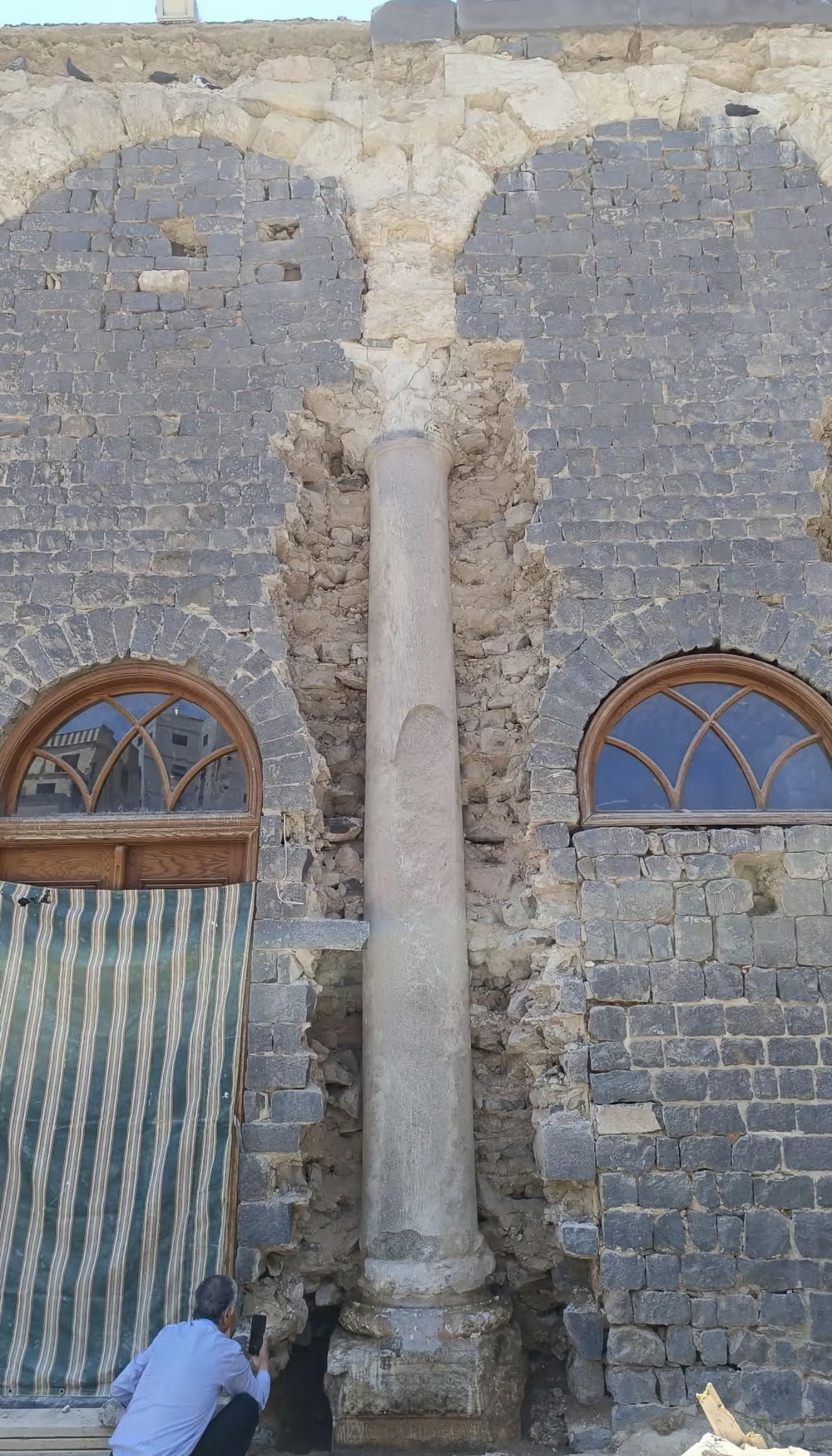
Roman-period column with inscribed base found during renovation of the Great Mosque of al-Nuri in Homs, Syria. Courtesy Maamoun Saleh Abdulkarim.
Archaeology at Emesa (modern Homs, Syria) does not give a single dramatic moment of religious revolution. Instead, it offers something more historically valuable: layers. Coins, tombs, mosaics, and reused sacred spaces—including recently uncovered inscriptions on column bases—reveal the slow transformation of a powerful pagan city into a Christian and then Muslim one. For Bible readers, the site allows a glimpse into the long arc of Christianity’s development within the Roman world.
The earliest well-attested stratum at Emesa shows the dominance of pagan culture. A mosaic of Hercules reveals the city’s syncretistic religious culture, where local Syrian worship blended with broader Greco-Roman traditions. A richly furnished mausoleum—yielding a gold funerary mask and other elite grave goods—points to a powerful ruling priestly family, one of whose members, Elagabalus, would later become the Roman emperor.
Roman-period coins depict the grand Temple of the Sun housing the sacred black stone embodying the Emesan sun god Elagabal (later linked to Emperor Elagabalus), while column-base inscriptions praise divine cosmic power and royal authority linked to this deity. These Greek inscriptions, uncovered during restoration of the Great Mosque of al-Nuri, survived centuries of redevelopment. Professor Maamoun Abdulkarim of the University of Sharjah (UAE), who published the finds, explained in personal correspondence: “In my view, the Temple of the Sun should not be understood as a lost structure, but as a dynamic sacred space that was religiously redefined across successive periods.”
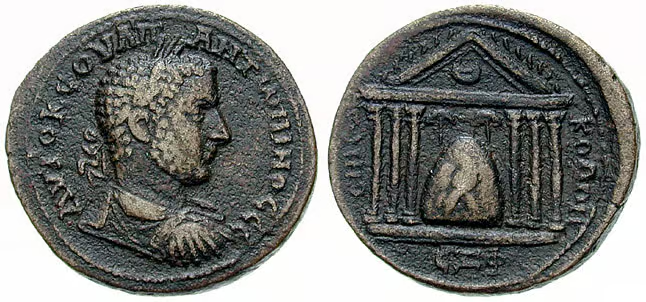
Roman coin minted in Homs depicting a sacred stone inside the Temple of the Sun. Classical Numismatic Group, Inc. http://www.cngcoins.com, Public domain, via Wikimedia Commons.
The strong pagan character of Emesa began changing in the third century CE. Burial practices shifted. Catacombs in the al-Shorfa area contain corridors, niches, lamps, and symbolic decoration associated with early Byzantine Christianity. Grave inscriptions emphasize themes resonant with Christian theology, like resurrection and eternal life. The evidence from Emesa is not explosive or revolutionary, but subtle. Christianity first appeared at the margins—in burial customs, naming patterns, and small communal spaces.
This layered material record mirrors what unfolds in the Acts of the Apostles. Acts describes Christianity beginning as a small, socially vulnerable movement operating within cities dominated by temples and civic cults. Paganism coexists alongside emerging Christian practices, gradually giving way to transformation.
FREE ebook: Paul: Jewish Law and Early Christianity. Paul’s dual roles as a Christian missionary and a Pharisee.
Geography reinforces this textual connection. Emesa lay a little more than 100 miles from Antioch, the early Christian hub where disciples were first called “Christians” (Acts 11:26). Situated on trade routes linking Antioch and Damascus, Emesa was well within the communication network of Roman Syria. Antioch served as a launching point for missionary activity. For example, Saul (Paul) departed from there on his first journey. Cities like Emesa would have made natural destinations of early Christian missions.
The archaeological silence of monumental churches at third-century Emesa suggests that Christianity had not yet reshaped public space. This was a time when Christians faced persecution under emperors like Decius, Valerian, and later Diocletian. Public Christian expression was risky and often suppressed. The decisive transformation of Emesa likely came in the fourth or fifth century. After legalization under Constantine the Great and later imperial decrees under Theodosius I, many pagan temples were repurposed for Christian worship in that time.
The Book of Acts ends with Paul preaching in Rome, leaving the future unwritten. In a sense, Emesa shows what that future looked like on the ground. Christianity did not immediately erase paganism; it infiltrated, adapted, endured persecution, and over time took root.
Lauren K. McCormick is an assistant editor at Biblical Archaeology Review and a specialist in ancient Near Eastern religions, visual culture, and the Bible. She holds degrees in religion from Syracuse University, Duke University, New York University, and Rutgers University, and completed a postdoctoral fellowship on religion and the public conversation at Princeton University.
Become a BAS All-Access Member Now!
Read Biblical Archaeology Review online, explore 50 years of BAR, watch videos, attend talks, and more

Related reading in Bible History Daily
All-Access members, read more in the BAS Library
Not a BAS Library or All-Access Member yet? Join today.
Related Posts


Must-Read Free eBooks
Want more Bible history?
Sign up to receive our email newsletter and never miss an update.
Unlock Unlimited Access to the Bible's Past

Unlock Unlimited Access to the Bible's Past
Become an All-Access Member to explore the Bible's rich history. Get Biblical Archaeology Review in print, full online access, and FREE online talks. Plus, enjoy special Travel/Study discounts. Don't miss out—begin your journey today!

I must take issue with the constant reference to “early Christians”. The Yeshua movement was dominated by Jews for the first couple of centuries after His death. Even the so-called NT teaching that Antioch is the first place to call Believers Christians is misleading. Whether Hebrew or Aramaic was the Synagogue language in Antioch, the word word have been something like Mashiachim or similar. Even Christos was a translation of Mashiach (Messiah).
Christians were gentiles. That term for them was formalized by Constantine’s Bishops. Until then, to use more modern English lingo, they would have been called Messianics. Jews would never have considered converting a pagan temple to a house of worship for the Hebrew God.