


Second Temple Period Workshop Discovered Near Jerusalem
Stone vessels, Jewish purity, and the wedding at Cana
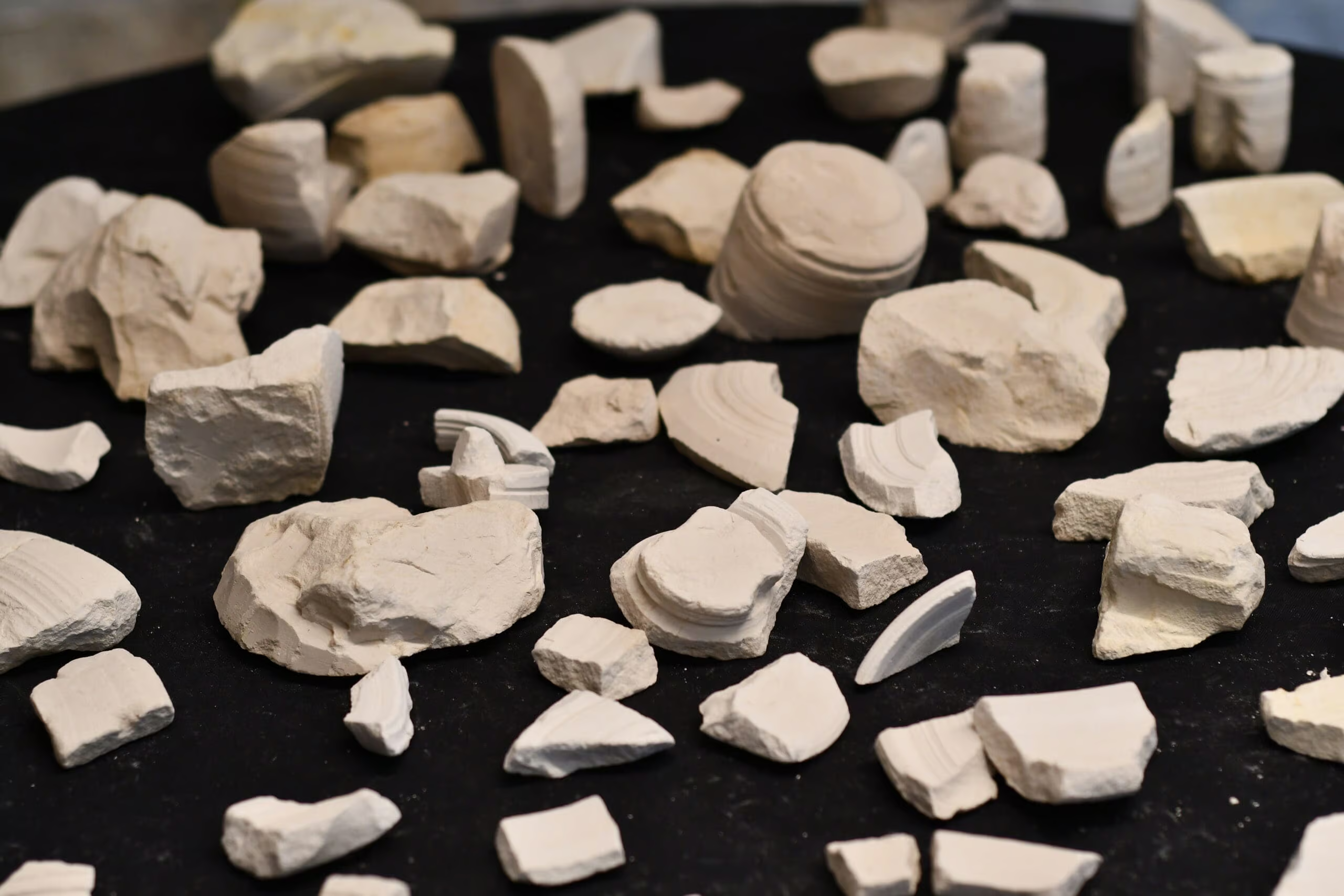
Stone vessels from the Second Temple period found in a cave on Mt. Scopus, near Jerusalem. Courtesy Israel Antiquities Authority.
A recently uncovered stone vessel production workshop east of Jerusalem is shedding light on craft production during the late Second Temple period (first century BCE–first century CE). Found in a cave on the eastern slopes of Mt. Scopus following the interception of antiquities thieves, the site contained hundreds of chalk limestone vessel fragments, unfinished cups and bowls, and substantial manufacturing debris—clear evidence of organized, on-site production.

FREE ebook: Jerusalem Archaeology: Exposing the Biblical City Read about some of the city’s most groundbreaking excavations.
Many of the vessels bear the marks of lathe-turning technology. Concentric grooves and symmetrical forms indicate that craftspeople shaped the stone vessels using a mechanical, spinning device. This method allowed for standardized cups and bowls to be produced with precision.
Four or five other vessel workshops have been found in Israel that date to the Roman period. The Mt. Scopus cave therefore joins a small but significant group of sites reconstructing an industry that may be connected to first-century Jewish life. In addition to these stone vessel workshops, ritual baths also proliferated in Jerusalem and throughout Judea and Galilee during the first century BCE and first century CE, suggesting heightened attention to purity in daily life.
Rabbinic purity laws further clarify the importance of stone vessels. The Mishnah (Kelim 10:1) states that stone does not contract impurity in the same way that pottery does. The late Second Temple period overlaps with the historical setting of the New Testament, where stone vessels are mentioned in John 2:6 at the wedding at Cana. Six stone water jars are described as being used for Jewish purification rites. Discoveries like the Mt. Scopus workshop provide tangible archaeological context for such references.
The workshop’s location adds further significance. Mt. Scopus lies along the natural northeastern approach to Jerusalem, historically used by travelers coming from Jericho, the Jordan Valley, and regions east of the Jordan River. Literary sources, including Josephus, describe military movements approaching the city from this direction during the First Jewish Revolt (66–74 CE). The scale of production suggests that vessels made in the cave were likely distributed beyond local residents, potentially serving pilgrims and other travelers arriving from the east.
Lauren K. McCormick is an assistant editor at Biblical Archaeology Review and a specialist in ancient Near Eastern religions, visual culture, and the Bible. She holds degrees in religion from Syracuse University, Duke University, New York University, and Rutgers University, and completed a postdoctoral fellowship on religion and the public conversation at Princeton University.
Become a BAS All-Access Member Now!
Read Biblical Archaeology Review online, explore 50 years of BAR, watch videos, attend talks, and more

Related reading in Bible History Daily
All-Access members, read more in the BAS Library
Discovering What Jewish Miqva’ot Can Tell Us About Christian Baptism
Not a BAS Library or All-Access Member yet? Join today.
Related Posts


Must-Read Free eBooks


Want more Bible history?
Sign up to receive our email newsletter and never miss an update.
Unlock Unlimited Access to the Bible's Past

Unlock Unlimited Access to the Bible's Past
Become an All-Access Member to explore the Bible's rich history. Get Biblical Archaeology Review in print, full online access, and FREE online talks. Plus, enjoy special Travel/Study discounts. Don't miss out—begin your journey today!
