


The Sands of Time
Foundation sand discovered at Ishtar’s temple in Assur
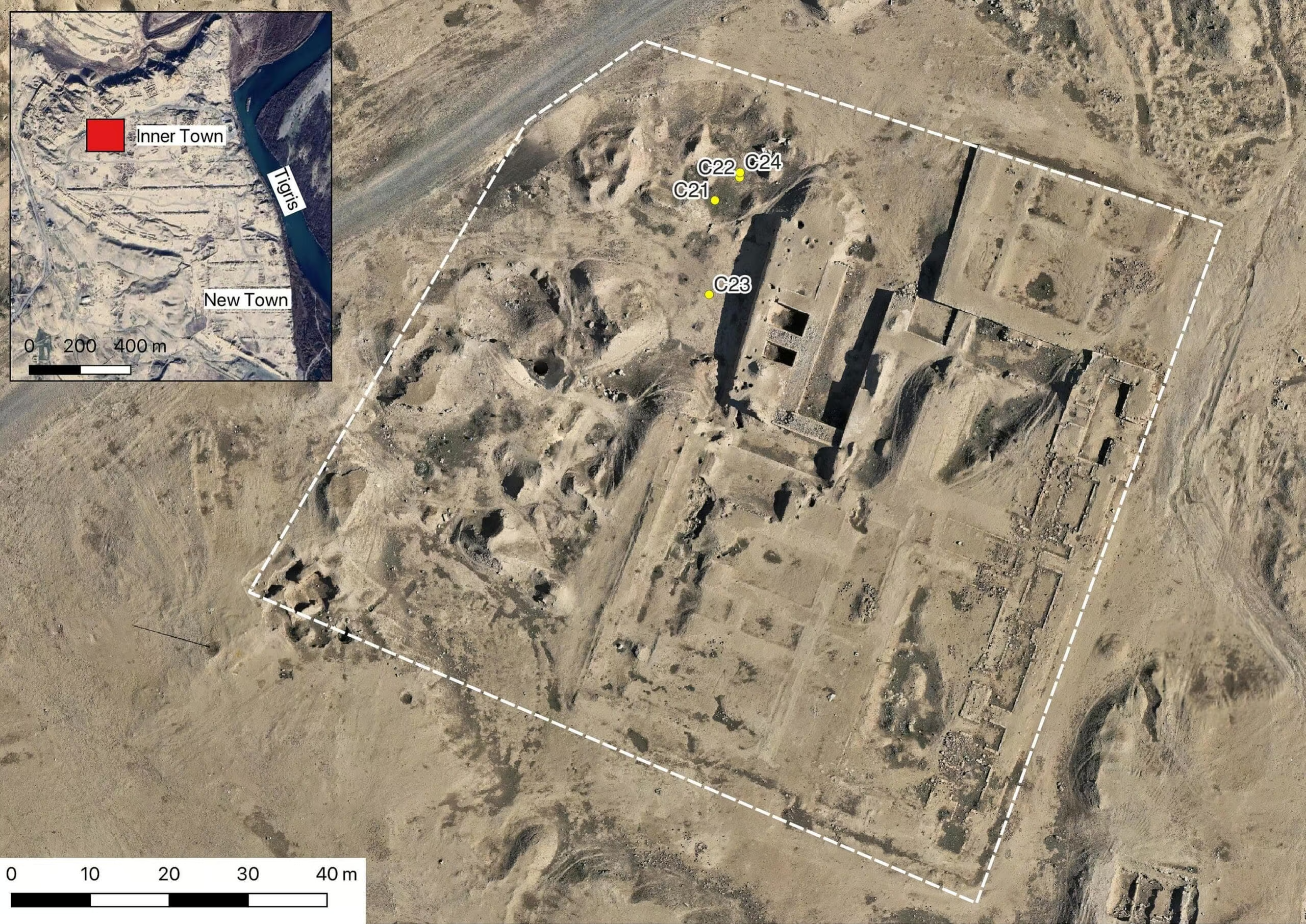
Third to mid-first millennia BCE Ishtar temple complex (white dashed line) in Assur (Iraq), showing four sediment sample locations. Courtesy Mark Altaweel et al., “The Sand Deposit Underneath the Ishtar Temple in Assur, Iraq,” Journal of Archaeological Science (2026), CC-BY 4.0.
A recent study of the Ishtar temple at Assur has identified an unusual feature beneath the temple’s earliest floor: a thick layer of prepared sand. Analyses reveal that this sand was intentionally selected and deliberately laid, rather than accumulating naturally or serving as ordinary construction fill. Similar sand foundations are known from ritual contexts in southern Mesopotamia, but this is the first clear evidence of such a practice at Assur, making the discovery especially significant. Also, radiocarbon results—dating materials above the sand to 2896 to 2702 BCE—push the temple’s earliest phase before the conventional Early Dynastic III period. This suggests that the sand foundation practice either spread from south to north at an early date or that it reflects a more widely shared Mesopotamian tradition than previously thought. The researchers argue that the sand layer functioned as a ritual foundation, purifying the temple ground before the superstructure was erected.
Even more striking is the sand’s origin. Geological analysis indicates that the sand was not sourced locally from the Tigris or nearby river systems, but derives from deposits linked to the Zagros mountains to the east. The Zagros mountains formed a vast and imposing barrier between Mesopotamia and the Iranian plateau, separating the lowlands from the highland world beyond. In the third millennium, these highlands were associated with Hurrian cultural traditions and the goddess Shawushka, a Hurrian form of Ishtar. The researchers propose that the choice of Zagros-derived sand may have been symbolic, potentially connecting the temple to Hurrian or wider Ishtar cultural traditions.
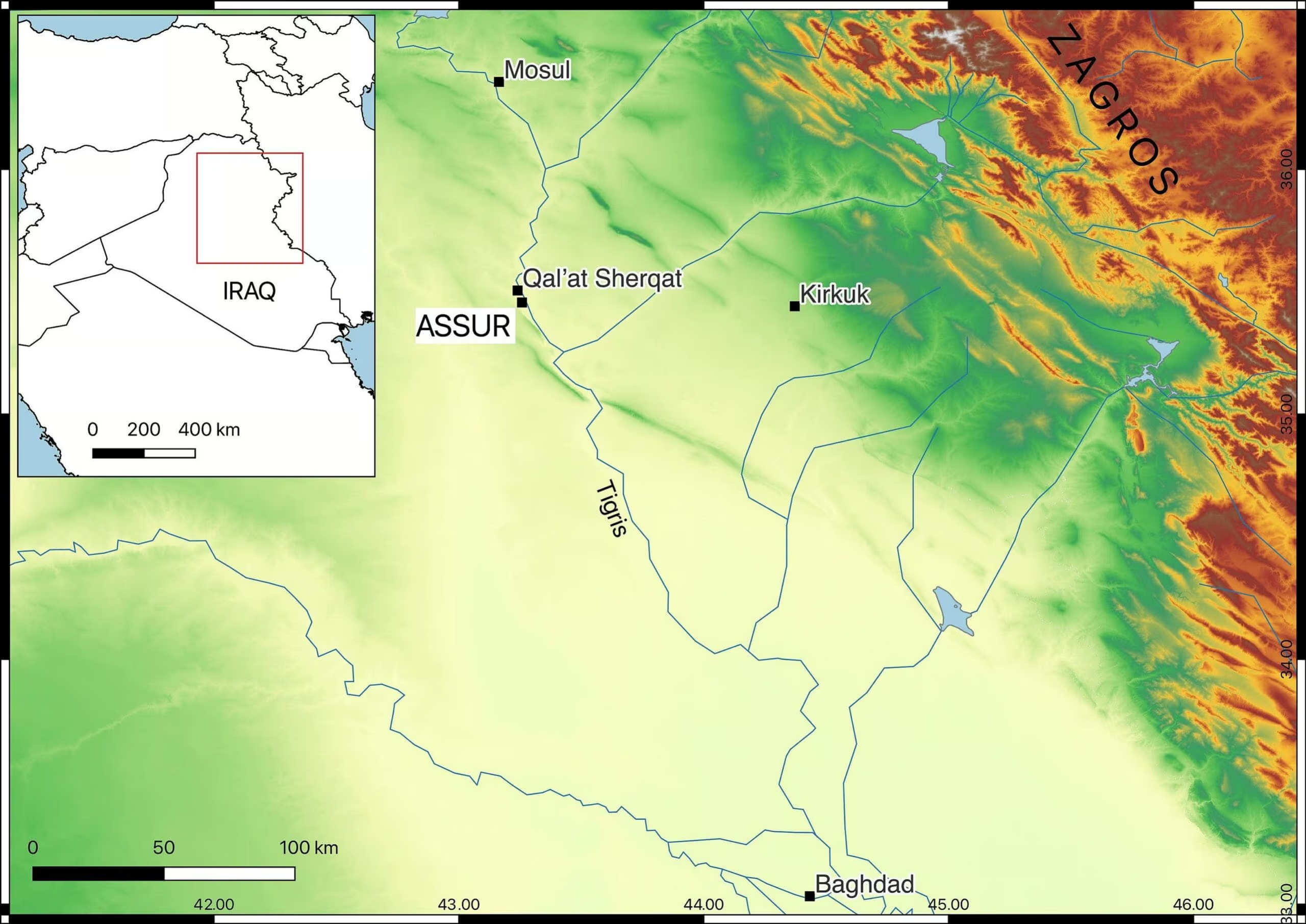
Location of Assur in northern Iraq, with the Zagros mountains to the east. Courtesy Mark Altaweel et al., “The Sand Deposit Underneath the Ishtar Temple in Assur, Iraq,” Journal of Archaeological Science (2026), CC-BY 4.0.
Ishtar was one of ancient Mesopotamia’s most important goddesses, associated with sex, fertility, and war, and often linked to royal power and city identity. She was worshiped widely across the region, but her cult could take different local forms that reflected cultural blending. In southern Mesopotamia (Sumer), Ishtar is thought to have been syncretized with Inanna. In northern Mesopotamian sites like Assur and Ninevah, she was frequently identified with the Hurrian goddess Shawushka.
The Ishtar temple at Assur was one of the city’s key sanctuaries. The new evidence of a ritual sand foundation suggests that divine space was not simply found or assumed but constructed. The presence of Zagros-derived sand implies deliberate material choice, which may have carried religious meaning.
FREE ebook: From Babylon to Baghdad. Ancient Iraq. Learn about Iraq and its cultural heritage. Download now.
The sand foundation practice suggests a broader ancient Near Eastern view in which materials could carry sacred meaning based on their origin and ritual use. Mountains, in particular, were seen as liminal zones—places where the veil was thin between the earthly and heavenly realms. For readers of the Bible, the Assur discovery provides a useful point of comparison: The Ten Commandments, formed at Mt. Sinai, are later placed in the Ark of the Covenant within the Tabernacle and ultimately deposited in the Jerusalem Temple, allowing the authority of a sacred mountain to be materially invoked.
The Ishtar temple at Assur thus serves as a reminder that, across the ancient Near East, holiness was often expressed through raw substances. These materials, drawn from meaningful landscapes, were believed to contain and make present some portion of the divine.
Lauren K. McCormick is an assistant editor at Biblical Archaeology Review and a specialist in ancient Near Eastern religions, visual culture, and the Bible. She holds degrees in religion from Syracuse University, Duke University, New York University, and Rutgers University, and completed a postdoctoral fellowship on religion and the public conversation at Princeton University.
Become a BAS All-Access Member Now!
Read Biblical Archaeology Review online, explore 50 years of BAR, watch videos, attend talks, and more

Related reading in Bible History Daily
All-Access members, read more in the BAS Library
Not a BAS Library or All-Access Member yet? Join today.
Related Posts


Mar 9
The Nun of the Rings

Mar 8
Deborah in the Bible

Must-Read Free eBooks

Want more Bible history?
Sign up to receive our email newsletter and never miss an update.
Unlock Unlimited Access to the Bible's Past

Unlock Unlimited Access to the Bible's Past
Become an All-Access Member to explore the Bible's rich history. Get Biblical Archaeology Review in print, full online access, and FREE online talks. Plus, enjoy special Travel/Study discounts. Don't miss out—begin your journey today!
