


An Ode to Oxen
Archaeological study illuminates the biblical importance of cattle
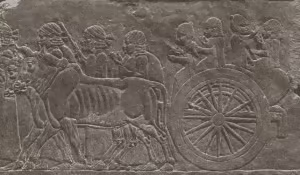
Oxen hauling Elamite deportees captured by Ashurbanipal in 664 BCE. Panel found on a wall in the North Palace at Ninevah (Iraq). Louvre AO19907 Louvre Museum, CC0, via Wikimedia Commons
Why are cattle such a big deal in the Hebrew Bible?
Imagine your car, your savings account, and your power grid were all the same thing, and alive. In the ancient Near East, that was the ox. Oxen pulled plows through hard soil, turned harvests into surplus, powered economies, and quietly determined who prospered and who did not. That is why cattle appear so often in Israel’s laws, sacrifices, and metaphors. Often overshadowed in popular imagination by sheep, the ox (and its uncastrated counterpart, the bull) was a central biblical animal—an embodiment of how connected land, labor, worship, and power were.
Archaeologists working at Gordion, the Iron Age capital of Phrygia in central Anatolia, have shown just how much effort went into managing oxen in the ancient world. Using multiple methods—including analysis of bone damage, joint stress, and chemical traces of food in cattle bones from the Bronze and Iron Ages—the study reveals that draught cattle were fed cultivated cereals and wild forage, while non-draught cattle grazed more freely. Their skeletons also display pathologies consistent with prolonged traction labor, including rear bones worn down from prolonged plowing and hauling. The authors find that deliberate provisioning of nutrition-dense food for draught cattle correlates with periods of political and economic expansion, especially during the rise of the Phrygian kingdom.
Draught cattle received special treatment because they were seen as engines of development. Unlike sheep or goats, cattle transform landscapes. They were the literal means by which ancient people broke ground, planted fields, hauled grain, and moved goods. Their ability to plow heavier soils expanded the farmable land, supporting permanent settlements and higher population density. Oxen enabled the all-important shift from subsistence farming to surplus production.
This is the agricultural world the Hebrew Bible inhabits.
Initially appreciated, as the Gordion study suggests, as beasts of burden, oxen then became symbols in biblical prophecy, law, and metaphor. A yoke is not an abstraction but a wooden beam pressed across an animal’s neck and shoulders, fixing direction and distributing weight. In the Bible, this becomes the language of political domination. To live under foreign rule is to live yoked. Liberation, by contrast, is imagined as the breaking of that yoke. Leviticus describes God freeing Israel from Egypt by snapping the bars that bent their backs—a metaphor that only works in a society familiar with traction labor.
FREE eBook: Life in the Ancient World.
Craft centers in Jerusalem, family structure across Israel and ancient practices—from dining to makeup—through the Mediterranean world.
Cattle were also central to worship. Oxen are the most costly sacrificial animals in the Hebrew Bible, required for communal atonement and priestly ritual. To offer a bull was to surrender accumulated labor and future productivity.
Biblical law resists the logic of endless extraction. Sabbath rest extends even to oxen, acknowledging the limits of labor and the cost of exploitation. As Israel’s economy grows and surplus becomes concentrated, the prophets warn that the same systems generating blessing can also become instruments of oppression. The ox that works under a yoke becomes a metaphor for slavery, and the extraction of surplus by kings mirrors the harnessing of human labor. Prophets like Amos and Micah critique societies that benefit elites by placing unbearable burdens on the poor, exposing how the tools of productivity can be turned into mechanisms of domination.
The Gordion study shows that these biblical concerns were not abstract theology. They emerged from the lived realities of ancient agricultural systems. In both archaeology and the Bible, cattle are shown to generate wealth and demand restraint. They also risk exploitation, provoking ethical reflection. Oxen did an immense amount of physical labor in ancient Israel—pulling plows and threshing grain—but they also did a lot of conceptual work, shaping how power, blessing, and communal responsibility were understood.
Lauren K. McCormick is an assistant editor at Biblical Archaeology Review and a specialist in ancient Near Eastern religions, visual culture, and the Bible. She holds degrees in religion from Syracuse University, Duke University, New York University, and Rutgers University, and completed a postdoctoral fellowship on religion and the public conversation at Princeton University.
Become a BAS All-Access Member Now!
Read Biblical Archaeology Review online, explore 50 years of BAR, watch videos, attend talks, and more

Related reading in Bible History Daily
All-Access members, read more in the BAS Library
Not a BAS Library or All-Access Member yet? Join today.
Related Posts

Mar 9
The Nun of the Rings

Mar 8
Deborah in the Bible

Must-Read Free eBooks
Want more Bible history?
Sign up to receive our email newsletter and never miss an update.
Unlock Unlimited Access to the Bible's Past

Unlock Unlimited Access to the Bible's Past
Become an All-Access Member to explore the Bible's rich history. Get Biblical Archaeology Review in print, full online access, and FREE online talks. Plus, enjoy special Travel/Study discounts. Don't miss out—begin your journey today!
